
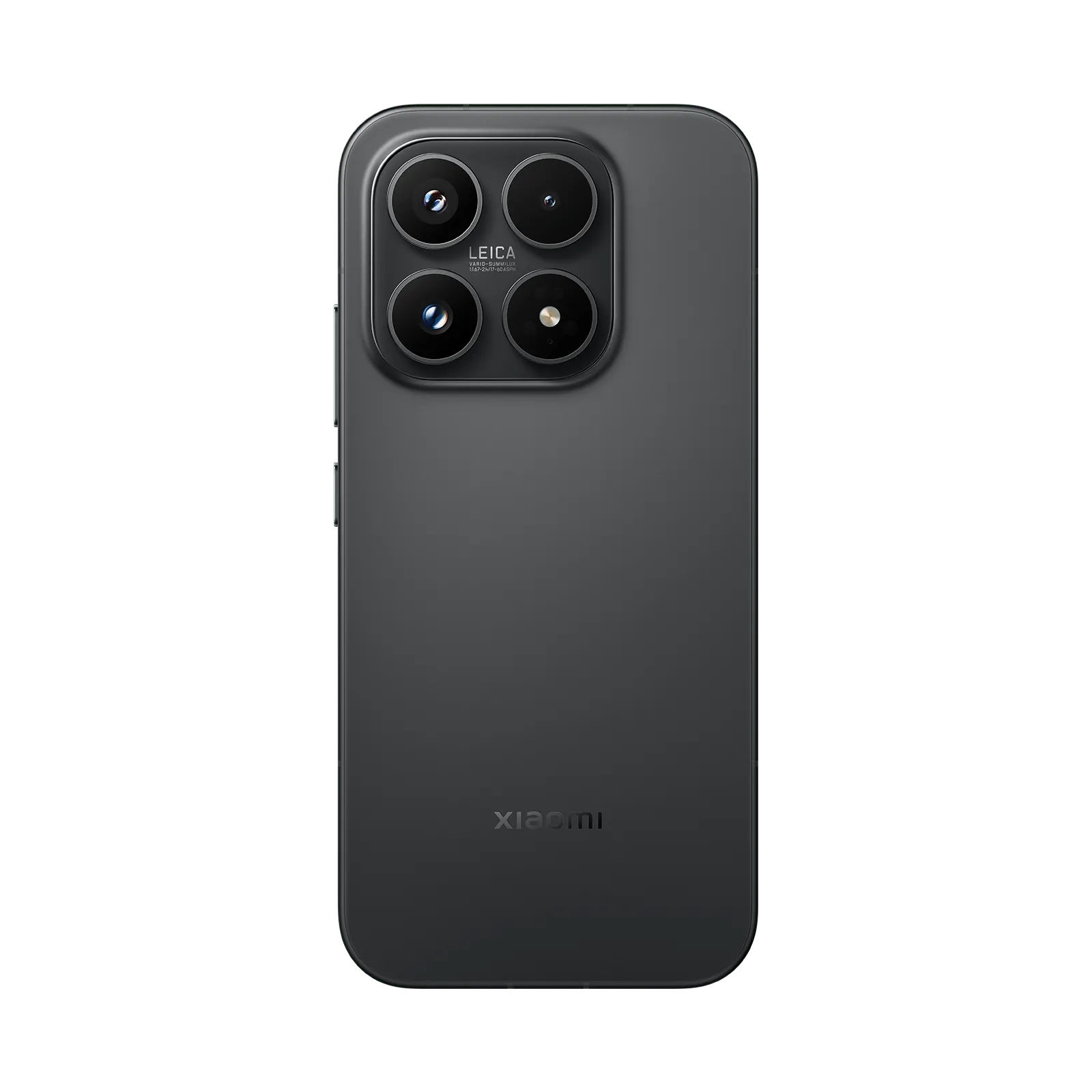
The Xiaomi 17 makes a persuasive case that a compact flagship no longer has to mean accepting a small battery. Its 6.3-inch body is close in scale to the iPhone 17 and Galaxy S26, yet Xiaomi has fitted a 6,330mAh silicon-carbon battery, 100W wired charging, 50W wireless charging, and Qualcomm’s Snapdragon 8 Elite Gen 5 inside.
That combination gives the Xiaomi 17 a clearer identity than its conservative appearance suggests. This is not a cheap flagship killer, nor is it the camera-at-any-cost Xiaomi 17 Ultra. It is the practical model in the family: small enough to use comfortably with one hand, powerful enough for demanding games, and unusually difficult to drain in a normal day.
The Xiaomi 17’s real breakthrough is not raw speed. It is fitting big-phone endurance into a genuinely manageable flagship.
Design: compact, premium, and overly familiar
At 151.1 x 71.8 x 8.06mm and 191g, the Xiaomi 17 is refreshingly manageable by modern flagship standards. The matte glass back resists fingerprints, the aluminum frame feels substantial, and the IP68 rating provides the water and dust resistance expected at this price. Xiaomi’s Shield Glass protects the front, while narrow 1.18mm bezels help the screen occupy almost the entire face of the phone.
The problem is originality. Flat sides, rounded corners, and the square camera island make the Xiaomi 17 look conspicuously similar to recent iPhones. Android Authority’s hands-on reached the same conclusion, calling the resemblance unusually strong for a major Android brand. The construction is polished, but little about the silhouette feels distinctively Xiaomi.
That criticism matters less once the phone is in use. The compact width is comfortable, the matte finish is practical, and the camera bump does not undermine the otherwise balanced shape. Buyers who value ergonomics over visual novelty will find plenty to like.
Display: one of the best reasons to choose the smaller phone
The 6.3-inch LTPO OLED panel has a 2656 x 1220 resolution and an adaptive 1–120Hz refresh rate. Text looks exceptionally sharp, motion is smooth, and OLED contrast gives photos and HDR video the depth expected from a premium display. Xiaomi rates peak brightness at 3,500 nits in supported scenarios, and independent reviewers found the screen easy to read outdoors.
Tech Advisor’s testing noted that full-panel brightness is lower than the headline peak suggests, but this does not stop the display from being excellent in everyday use. Dolby Vision and HDR10+ support, strong color controls, and high-frequency PWM dimming round out a panel with very few meaningful weaknesses.
The ultrasonic fingerprint reader is another welcome flagship detail. It is positioned beneath the display and avoids the light flash associated with cheaper optical sensors.
Performance: extremely fast, with compact-phone caveats
The Snapdragon 8 Elite Gen 5 is paired with 12GB of RAM and either 256GB or 512GB of storage on the global model. Everyday performance is effortless: apps launch quickly, multitasking feels immediate, and the phone has ample headroom for video editing and high-end games.
Sustained performance is more nuanced. TechRadar’s global-unit review reported only mild warmth after an hour of demanding gaming. Notebookcheck’s laboratory testing of the Chinese model, however, found that thermal limits prevented the GPU from sustaining its full potential under prolonged stress.
Those results are not necessarily contradictory. Short sessions and normal workloads play to the chip’s outstanding burst performance, while a compact chassis has less area to dissipate heat during long synthetic or gaming loads. The Xiaomi 17 is a top-tier performer, but dedicated mobile gamers may still prefer a larger phone with more thermal headroom.
Battery and charging: the defining advantage
The Vietnamese and global Xiaomi 17 use a 6,330mAh battery, not the 7,000mAh cell fitted to the Chinese version. Even with that regional reduction, the capacity is exceptional for a phone this size. Xiaomi says its silicon-carbon design retains at least 80% health after 1,600 charging cycles under its test conditions.
Published real-world testing supports the broader endurance claim. TechRadar found the phone lasted comfortably beyond a full day, while moderate use often left meaningful charge by evening. The adaptive display and efficient Snapdragon platform help turn the unusually large cell into practical longevity rather than a specification-sheet trophy.
Charging is equally competitive. The phone supports 100W wired PPS charging, 50W wireless charging, and 22.5W reverse wired charging. In TechRadar’s test, a compatible power source restored roughly 65% in 30 minutes. A charger may not be included in every market, but PPS support makes it easier to reach high speeds without buying a proprietary Xiaomi brick.
Cameras: excellent stills, limited long-range reach
The Leica-branded rear system uses three 50MP cameras:
- A 23mm-equivalent main camera with an f/1.67 Leica Summilux lens, optical stabilization, and a 1/1.31-inch Light Fusion 950 sensor.
- A 60mm-equivalent 2.6x floating telephoto with optical stabilization and focus down to 10cm.
- A 17mm-equivalent ultrawide with a 102-degree field of view.
The main camera is the star. It produces detailed images with confident contrast and handles difficult highlights well. Leica Vibrant offers the more immediately striking look, while Leica Authentic keeps color and contrast more restrained. Skin tones and portrait separation are also convincing, particularly when there is enough light for the main sensor to work at its best.
The floating telephoto is more useful than its modest 2.6x magnification implies. Its close-focusing ability makes it excellent for food, objects, and detail shots without forcing the phone close enough to cast a shadow. Conventional long-range zoom is less impressive: Tech Advisor found quality deteriorated substantially at 10x and beyond.
The ultrawide captures a useful field of view and benefits from its 50MP resolution, but the lack of autofocus limits its flexibility. The 50MP front camera is detailed in good light, although aggressive processing can make faces look less natural than shots from the rear cameras.
Overall, this is a strong and versatile camera phone rather than a substitute for the Xiaomi 17 Ultra. The standard model is at its best between the native ultrawide, main, and short-telephoto focal lengths; buyers who prioritize extreme zoom should look elsewhere.
HyperOS: capable software that still gets in the hardware’s way
The Xiaomi 17 launched globally with HyperOS 3 over Android 16. The interface is fast, visually consistent, and packed with useful multitasking, device-linking, and Gemini features. Xiaomi also promises five major OS upgrades and six years of security support for the global model, a meaningful improvement over its older update policies.
The less welcome side of HyperOS remains. There are preinstalled Xiaomi and third-party apps, promotional recommendations can appear inside first-party software, and several interface choices borrow heavily from iOS. Most unwanted apps can be removed or disabled, but a premium phone should not require a cleanup session before it feels premium.
As of July 2026, Android 17 has begun rolling out to the Xiaomi 17 in some regions. Availability can vary by market, and the update initially retains the familiar HyperOS 3 interface rather than delivering a major visual overhaul.
Verdict
The Xiaomi 17 is one of the most complete compact Android flagships available. Its screen is excellent, the main and telephoto cameras are rewarding, performance is genuinely top-tier, and the battery advantage is large enough to change how often owners need to think about charging.
Its compromises are mostly about refinement rather than capability. The design is derivative, HyperOS carries too much preinstalled clutter, the ultrawide lacks autofocus, and long-range zoom is not competitive with dedicated camera flagships. It is also priced as a premium phone, so its appeal comes from the unusual combination of size and hardware rather than bargain value.
Buy the Xiaomi 17 if you want flagship speed, dependable cameras, and big-phone battery life without carrying a giant handset. Choose a Pixel for cleaner software, a Galaxy for a more mature ecosystem, or the Xiaomi 17 Ultra if camera reach matters more than pocketability.
Rating: 4.5 out of 5
This review is an editorial synthesis of Xiaomi’s published specifications and independent testing from TechRadar, Tech Advisor, Android Authority, Notebookcheck, and Android Central. tekfai did not conduct its own laboratory or long-term hands-on test for this article. Product image courtesy of Xiaomi Vietnam.